Every time a machine is serviced, a silent hazard lurks—unexpected startup. A conveyor belt jolts to life. A press descends mid-maintenance. These aren’t worst-case scenarios—they’re preventable tragedies. The lockout tagout (LOTO) log book isn’t just paperwork. It’s a tactical record that prevents injuries, maintains compliance, and creates accountability across shifts, teams, and audits.
OSHA's 29 CFR 1910.147 mandates that employers implement a written energy control program, including documentation of each servicing event. At the core of that documentation? The LOTO log book. Yet, in too many facilities, log books are incomplete, misplaced, or treated as an afterthought. That’s not just a compliance gap—it’s a liability waiting to activate.
This is how a properly managed lockout tagout log book functions as both a shield and a strategic tool.
Why a LOTO Log Book Is Non-Negotiable
A log book turns abstract safety procedures into documented actions. Without it, you can’t prove that lockout procedures were followed, who performed them, or when equipment was restored. That lack of traceability undermines training efforts, complicates investigations, and weakens your position during OSHA inspections.
Consider this real-world example: A maintenance technician is injured when a hydraulic press activates during adjustments. The investigation reveals multiple technicians worked on the system that day. Without a log book entry confirming who applied locks and when, the employer can't demonstrate compliance—resulting in fines and worker distrust.
The log book does more than check a regulatory box. It:
- Creates a chain of custody for energy isolation
- Enables shift handover transparency
- Supports incident root cause analysis
- Reduces confusion during multi-person servicing
In high-turnover environments or facilities with contract maintenance crews, the log book becomes the single source of truth.
What Must Be Included in Every Entry
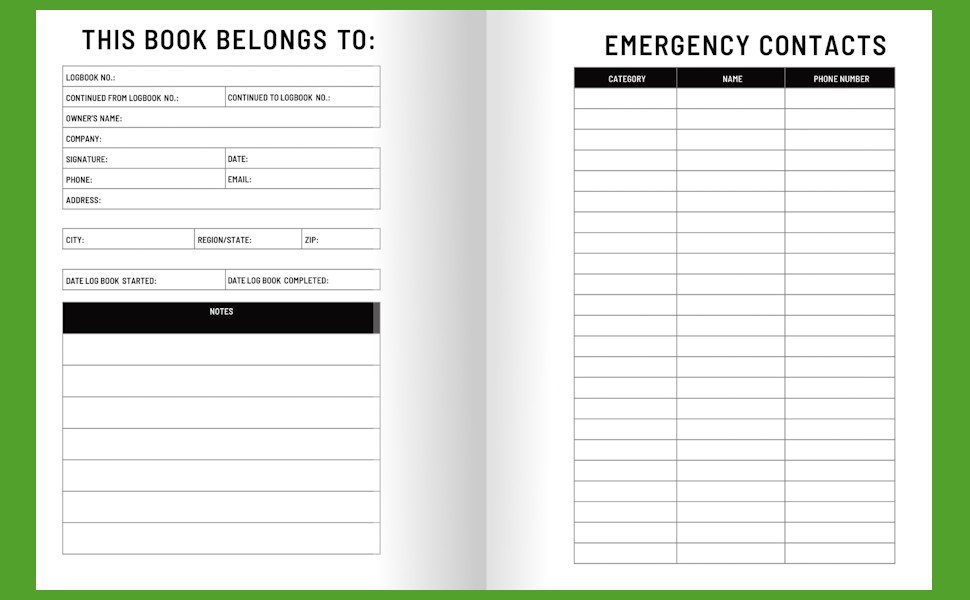
A useful LOTO log book isn’t just a timestamp and name. Each entry should capture enough detail to reconstruct the control process later. Generic logs invite shortcuts. Specificity prevents them.
Minimum required fields per OSHA and best practices:
| Field | Purpose | Example |
|---|---|---|
| Date and time of lock application | Establishes timeline | 04/18 06:45 |
| Equipment ID or name | Identifies isolated machine | Conveyor Line 3 Motor |
| Employee name and ID | Assigns responsibility | J. Rivera (EMP-342) |
| Type of energy isolated | Clarifies hazards | Electrical, hydraulic |
| Lock number used | Tracks physical device | LOCK-217 |
| Reason for lockout | Explains servicing purpose | Bearing replacement |
| Time of lock removal | Confirms controlled re-energizing | 04/18 10:20 |
| Authorized employee initials | Validates release | J.R. |

Blank spaces lead to omissions. Pre-formatted tables or digital forms with required fields reduce incomplete entries.
Common Mistakes That Undermine LOTO Logs
Even facilities with log books often undermine their value through preventable errors.
1. Backdating or post-completion entries Technicians “remembering” to log after the fact introduce inaccuracies. Real-time logging is essential. Supervisors should spot-check entries hourly during major shutdowns.
2. Using non-unique lock identifiers If lock numbers aren’t tracked per employee, you lose individual accountability. A lock marked “#5” used by multiple people defeats the purpose.
3. Failing to log group lockouts During complex maintenance, multiple employees apply locks to one machine. The log must list every participant—not just the lead technician.
4. Ignoring tagout-only scenarios Even when tags (not locks) are used—such as on valves or control panels—these actions must be recorded. Tags are less secure; documentation is extra critical.
5. Storing logs offsite or digitally without backup Paper logs left in a supervisor’s office are vulnerable to loss. Digital logs without offline access fail during outages. Store physical copies in a designated, accessible location and maintain encrypted backups.
Physical vs. Digital LOTO Log Books: Choosing What Fits
The debate isn’t about obsolescence—it’s about fit. Both formats have strengths. Your choice depends on scale, workforce mobility, and compliance rigor.
Physical Log Books Best for: Small sites, remote locations, unionized environments with paper-based workflows.
Pros: - Immediate access without tech dependency - Handwritten entries create personal accountability - Required in areas with no Wi-Fi or power
Cons: - Prone to damage, loss, or tampering - Hard to search or audit retrospectively - Difficult to share across departments
Digital LOTO Log Systems Best for: Large manufacturers, multi-site operations, regulated industries like pharma or energy.
Pros: - Entries timestamped automatically - Integration with CMMS or safety platforms - Instant audit trails and reporting - Alerts for overdue removals
Cons: - Requires device access and training - Potential for system downtime - Higher initial setup cost
Many forward-thinking companies use hybrid models: paper logs as primary with daily digital uploads for central tracking.
Top 5 LOTO Log Book Solutions for 2025
Choosing the right tool matters. Here are five reliable options—spanning paper to cloud—that support compliant, effective logging.

| Solution | Type | Key Feature | Best For |
|---|---|---|---|
| Brady LOTO Log Book (Stock #269220) | Physical | Tear-resistant, OSHA-aligned layout | Small to mid-sized facilities |
| Grainger Lockout Tagout Record Book | Physical | Carbon copy pages for duplicate records | High-volume maintenance teams |
| Pro-SAFE LOTO Software | Digital | Mobile app with GPS verification | Enterprises with remote teams |
| Schneider Electric EcoStruxure LOTO | Digital | Real-time dashboards and lock management | Smart factories, Industry 4.0 sites |
| Creative Safety Supply LOTO Log | Physical | Multilingual fields, visual prompts | Diverse or multilingual workforces |
Note: Always verify compatibility with your organization’s LOTO policy. Some digital platforms require integration with existing lock hardware (e.g., RFID-enabled locks).
How to Audit Your Current LOTO Log Process
A log book is only effective if it’s used correctly. Conduct a quarterly audit using this checklist:
- Completeness: Are all required fields filled in 100% of entries?
- Timeliness: Are entries made at the moment of lock application and removal?
- Accuracy: Do dates/times align with work orders or shift logs?
- Retention: Are logs stored for at least one year (OSHA minimum)?
- Accessibility: Can safety officers retrieve a log within 10 minutes?
- Training alignment: Do employees know how to use the log correctly?
During one audit at a Midwestern packaging plant, 38% of entries lacked removal times. After retraining and switching to carbon-copy forms, compliance rose to 96% in six weeks.
Integrating the Log Book into Broader Safety Workflow
The LOTO log shouldn’t be an island. It’s part of a larger energy control ecosystem.
Best integration practices:
- Link to work orders: Tie each LOTO entry to a maintenance ticket in your CMMS.
- Include in pre-job briefings: Review active log entries before starting work.
- Use in incident drills: Simulate equipment restarts using actual log data.
- Review in safety meetings: Share anonymized examples of incomplete logs as teaching tools.
For example, a food processing facility reduced missed isolations by 70% after adding log book review to their morning team huddles.
The Cost of Skipping the Log Book
Fines tell part of the story. In 2023, a chemical plant was cited for $115,000 after an amputation incident—partly due to missing LOTO documentation. But the real costs are less visible:
- Increased workers’ comp claims
- Downtime from preventable accidents
- Erosion of safety culture
- Loss of credibility with regulators
A $20 log book can prevent six-figure liabilities. That’s not an expense. It’s risk mitigation.
Final Recommendation: Make It Mandatory, Make It Visible
A lockout tagout log book only works if it’s treated as mission-critical. Place it at every major equipment zone. Train new hires on its use during onboarding. Audit it monthly. Reward teams with perfect logs.
Don’t let documentation become an afterthought. The log book is where safety becomes tangible—where procedure meets proof.
Equip your teams. Document every lock. Own every entry.
Your next audit, injury report, or OSHA visit will reflect what you’ve built.
Frequently Asked Questions
What is the OSHA requirement for LOTO log books? OSHA 1910.147(c)(6)(i) requires employers to certify that energy control procedures are inspected at least annually and that each inspection is documented. While not every individual lockout must be logged by federal mandate, documenting each application is considered a best practice and often required by internal policy or third-party audits.
Can electronic logs replace paper LOTO logs? Yes, if the system ensures data integrity, prevents alterations, and provides a permanent record. Digital logs must be as reliable and accessible as paper versions.
How long should LOTO log books be kept? Minimum retention is one year, though many companies keep them for three to five years to support incident investigations or long-term audits.
Who is responsible for filling out the LOTO log? The authorized employee performing the lockout is responsible for completing the entry. Supervisors may verify accuracy but should not fill it out on behalf of workers.
Do tagouts need to be logged if no lock is used? Yes. Any form of energy isolation—whether lock, tag, or both—should be documented to maintain accountability and traceability.
Should contractors log their LOTO procedures? Absolutely. Contractors must follow the host employer’s LOTO program and document their actions in the same log book or integrated system.
Can one log book cover multiple machines? Yes, as long as each entry clearly identifies the equipment. However, dedicated logs for high-risk or high-frequency equipment (e.g., production lines) improve tracking.
FAQ
What should you look for in Lockout Tagout Log Book Essentials for Workplace Safety? Focus on relevance, practical value, and how well the solution matches real user intent.
Is Lockout Tagout Log Book Essentials for Workplace Safety suitable for beginners? That depends on the workflow, but a clear step-by-step approach usually makes it easier to start.
How do you compare options around Lockout Tagout Log Book Essentials for Workplace Safety? Compare features, trust signals, limitations, pricing, and ease of implementation.
What mistakes should you avoid? Avoid generic choices, weak validation, and decisions based only on marketing claims.
What is the next best step? Shortlist the most relevant options, validate them quickly, and refine from real-world results.